
You have a stack of fabrics waiting, a pattern you have been eager to try, and a vision for a quilt that will become a family heirloom. But your current machine struggles with thick layers, skips stitches on delicate cotton, or lacks the precision for free-motion work. Finding the best sewing machine for quilting and clothing can feel overwhelming with so many options. This guide simplifies your search by reviewing ten versatile models that excel at both garment construction and quilting projects, helping you choose a machine that grows with your skills.
Whether you are a beginner sewing your first dress or an experienced quilter upgrading your setup, the right machine makes every project more enjoyable. We have evaluated computerized and mechanical options from trusted brands like Brother, SINGER, and SewLaVie, focusing on stitch variety, ease of use, and durability. For more insights on choosing a reliable machine, check out our guide on best rated sewing machines for quilting.


Buying Guide: What to Look For in a Sewing Machine for Quilting and Clothing
Stitch Variety and Customization
A machine with a wide range of built-in stitches gives you flexibility for both garment sewing and quilting. Look for at least 30 stitches, including utility stitches like straight and zigzag, decorative options, and a one-step buttonhole. Computerized models often offer adjustable stitch length and width, letting you fine-tune for different fabrics. The Brother XR9550 features 165 stitches, making it a strong contender for diverse projects.
Quilting-Specific Features
For quilting, prioritize a machine with a drop feed mechanism for free-motion work, a wide extension table for handling large quilts, and a walking foot for even fabric feeding. An automatic needle threader and needle up/down function save time and reduce strain. The SINGER C7290Q includes an extension table and multiple quilting feet, ideal for ambitious projects.
Ease of Use for Beginners and Advanced Users
A user-friendly machine encourages practice and creativity. Look for an LCD screen for stitch selection, a jam-resistant drop-in bobbin, and clear threading guides. Computerized models often include start/stop buttons and speed control, which help beginners build confidence. The Brother XM2701 is a popular choice for newcomers, while the SINGER Smart Heavy Duty 9120 offers advanced features like app connectivity.
Build Quality and Durability
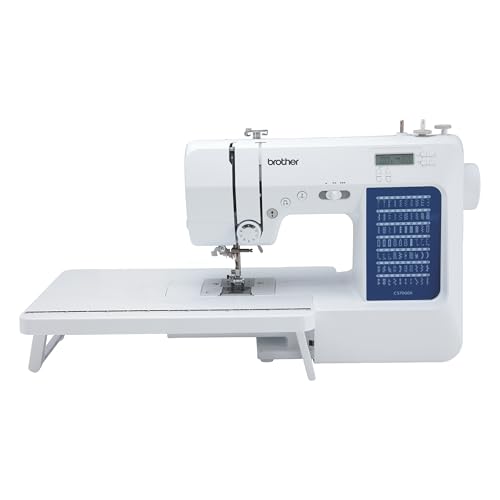
A sturdy machine handles heavy fabrics and frequent use. Models with a metal internal frame provide stability and reduce vibration, which improves stitch quality. The Brother CS7000X features a metal frame and fixed needle bar, making it reliable for denim and multiple layers. For more on durable options, see our janome skyline S5 AE review.
Final Thoughts
After reviewing these ten machines, the Brother XR9550 Computerized Sewing and Quilting stands out for its extensive stitch library and user-friendly features, making it ideal for sewists who want versatility for both garments and quilts. For those who prioritize heavy-duty performance and smart technology, the SINGER® Smart Heavy Duty 9120™ New offers embroidery capability and app control, perfect for tech-savvy creators. Both machines deliver excellent value and can handle a wide range of projects, so your choice depends on whether you value stitch variety or advanced connectivity.
Frequently Asked Questions
Can I use a sewing machine for quilting and clothing?
Yes, many modern machines are designed for both. Look for models with adjustable stitch length, a walking foot, and a wide table for quilting, plus a variety of utility stitches for garment construction. The Brother HC1850 is a great example of a dual-purpose machine.
What is the best stitch length for quilting?
For piecing, a stitch length of 2.0 to 2.5 mm works well. For free-motion quilting, a shorter stitch length of 1.5 to 2.0 mm provides better control. Most computerized machines allow you to adjust this easily.
Do I need a computerized sewing machine for quilting?
Not necessarily, but computerized models offer convenience features like automatic needle threading, speed control, and stitch memory. They are especially helpful for beginners and for complex quilting patterns. The SewLaVie 1130 is a budget-friendly computerized option.
How many stitches do I need for garment sewing?
For basic garment construction, 20 to 30 stitches are sufficient, including straight, zigzag, and buttonhole stitches. More stitches give you creative options for decorative seams and hems. The Brother CS7000X offers 70 stitches, which is ample for most clothing projects.