
You have mastered the basics. You can sew a straight line, insert a zipper, and maybe even tackle a tailored jacket. But now you are ready for more: intricate embroidery, flawless coverstitch hems, or high-speed quilting. The right machine can make these projects a joy instead of a struggle.
This guide is for advanced sewers who need precision, speed, and versatility. We have evaluated the top computerized machines from Brother, Janome, JUKI, and SINGER to find the ones that truly perform. Whether you need a combo sewing and embroidery machine or a dedicated coverstitch serger, we have you covered. For a broader look at computerized options, check our guide to the best rated computerized sewing machines.




Buying Guide
Stitch Variety and Flexibility
Advanced sewers need more than just a straight stitch. Look for a machine with a wide range of built-in stitches, including utility, stretch, decorative, and heirloom options. The Brother XR9550 offers 165 stitches, while the Juki HZL-DX7 boasts 287 patterns.
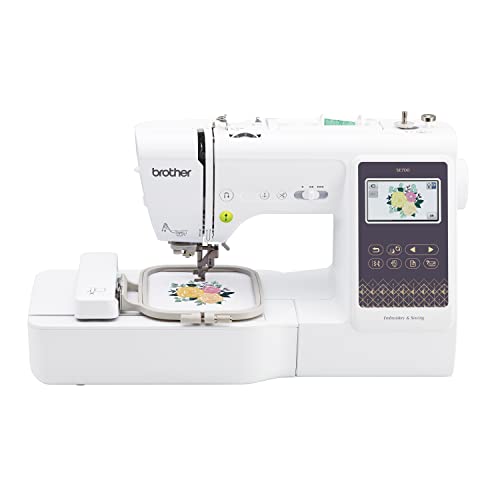
Also, consider the ability to adjust stitch length and width. This is crucial for working with different fabric weights and for creative stitching. If you love adding personalized touches, a machine with alphanumeric fonts or embroidery capabilities, like the Brother SE700, is a game-changer. For more on automatic buttonholes, see our top picks for automatic buttonhole machines.
Speed and Power
When you are sewing multiple layers of denim or heavy upholstery fabric, you need a machine that can power through. Look for a high maximum sewing speed, measured in stitches per minute (SPM). The Brother 2340CV serger reaches 1,100 SPM, and the Juki HZL-DX7 offers a top speed of 1,000 SPM.
Equally important is the machine’s ability to maintain consistent stitch quality at high speeds. A sturdy metal frame, like that in the Janome HD3000, reduces vibration and ensures accuracy. For heavy-duty projects, you might also consider a dedicated heavy-duty machine; explore our best heavy duty sewing machine for denim.
Ease of Use and Automation
Advanced doesn’t mean complicated. Look for features that save time and reduce frustration: automatic needle threaders, drop-in bobbins, and one-step buttonholes. A large touchscreen, like the 3.7-inch display on the Brother SE700, makes it easy to select stitches and edit designs.
Wireless connectivity is becoming a must-have. The Brother SE700 and SE2000 allow you to transfer designs from your computer or mobile device without a USB cable. This is a huge time-saver for embroidery enthusiasts. If you are new to computerized machines, you might want to read our best singer sewing machine for beginners guide first.
Final Thoughts
Choosing the best sewing machine for advanced sewers depends on your specific needs. For a versatile combo that handles both sewing and embroidery beautifully, look no further than the Brother SE700 Sewing and Embroidery Machine. If you focus on garment construction and need professional-grade coverstitch hems, the Brother 2340CV Coverstitch Serger Sewing Machine is an outstanding choice. Both machines deliver the precision and reliability that advanced sewers demand.
Frequently Asked Questions
What is the best sewing machine for advanced sewers in 2026?
The best machine for advanced sewers in 2026 depends on your primary projects. For a combination of sewing and embroidery, the Brother SE700 is a top choice. For those who focus on garment finishing, a dedicated coverstitch machine like the Brother 2340CV is invaluable.
Do advanced sewers need a computerized sewing machine?
Computerized machines offer precision, consistency, and a wide range of stitch options that are ideal for complex projects. Features like automatic buttonholes, adjustable stitch length and width, and needle positioning give you greater control. Many advanced sewers prefer them for these reasons.
Can a machine handle heavy fabrics like denim or leather?
Yes, many advanced machines are designed to handle heavy fabrics. Look for a strong motor, metal frame, and adjustable presser foot pressure. The Janome HD3000 and Juki HZL-DX7 are known for their ability to sew through thick layers.
What is the difference between a sewing machine and a serger?
A sewing machine creates stitches with one or two threads, while a serger (overlocker) uses multiple threads to sew, trim, and finish edges in one step. Sergers are great for stretch fabrics and professional-looking seams. For more on sergers, check out our JUKI TL-2000Qi review for a different type of machine.