
You’ve just finished sewing a beautiful garment, but the inside seams are fraying and look messy. You want that professional, clean finish you see in store-bought clothes. A serger, or overlock machine, is the answer. It trims, stitches, and finishes seams in one pass, giving your projects a polished look. But with so many options, finding the right one for a beginner can feel overwhelming.
This guide is here to help. We’ve evaluated the top sergers for beginners, focusing on ease of threading, versatility, and durability. We’ll break down the key features to look for and highlight our top recommendations to get you started on the right foot. For more in-depth information, check out our comprehensive guide to the best serger machines.


Buying Guide: What to Look for in a Beginner Serger
Before you dive in, it helps to know what makes a serger beginner-friendly. Here are the key criteria we used to evaluate these machines. Keep these in mind as you compare your options.
Ease of Threading
Threading a serger can be intimidating, especially with multiple threads and loopers. Look for machines with color-coded thread paths, clear diagrams, and features like a built-in looper threader. The SINGER® HD0500S Heavy Duty Serger Overlock even has an LED light near the lower looper to make this tricky step much easier.
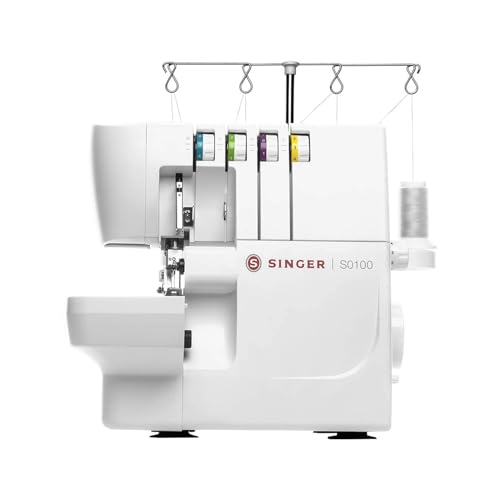
Some machines come pre-threaded, like the SINGER® S0100 High Speed Serger Overlock Machine, which is a huge plus for getting started right away. A user-friendly threading system will save you time and frustration, letting you focus on sewing.
Stitch Options and Versatility
A beginner serger should offer flexibility. Look for models with 2, 3, and 4-thread capabilities, which allow you to create different types of seams, rolled hems, and decorative edges. The SINGER® Heavy Duty 0420™ Next Evolution Serger offers 13 different stitch options, giving you plenty of room to grow your skills.
Consider the types of projects you’ll be working on. If you plan to sew with knits, a differential feed is essential to prevent wavy seams. If you want to finish edges on woven fabrics, a 3-thread overlock is a must. A machine with more stitch options provides greater creative freedom.
Durability and Build Quality
A serger is an investment, so you want one that will last. A sturdy metal frame provides stability and reduces vibrations, even when sewing through thick layers. Both the Brother 1034D Serger Overlock Sewing Machine and the SINGER® X5004-HD Serger Overlock Machine feature durable metal frames, ensuring they can handle regular use.
A powerful motor is also key, especially if you plan to sew heavier fabrics like denim or canvas. Look for a machine that can maintain a consistent stitch speed without bogging down. A heavy-duty motor and metal frame are signs of a machine that will serve you well for years to come. For more on professional finishes, you might also explore our best coverstitch machine guide.
Final Thoughts
Choosing the right serger as a beginner comes down to balancing ease of use with the features you’ll actually use. For a user-friendly option with excellent visibility, the SINGER® HD0500S Heavy Duty Serger Overlock is our top pick, while the Brother 1034D Serger Overlock Sewing Machine is a proven workhorse known for its reliability and straightforward operation. Whichever you choose, you’ll be well on your way to creating beautifully finished projects.
Frequently Asked Questions
Is a serger worth it for a beginner?
Absolutely. A serger gives your projects a professional finish and speeds up your sewing. It’s a game-changer for anyone who sews garments, and many beginner-friendly models are designed to make learning easy.
What is the easiest serger to thread?
Machines with color-coded thread paths and built-in threaders are the easiest. The SINGER® HD0500S with its Lower Looper LED and the SINGER® S0100 with its color-coded guides are both excellent choices for beginners.
Can a beginner use a 4-thread serger?
Yes, many beginner sergers offer 4-thread capabilities. It’s a great option for creating stronger seams on heavier fabrics. Start with a 3-thread stitch for basic finishing, and you can easily switch to 4-thread when you need extra durability.
What is the difference between a serger and a coverstitch machine?
A serger finishes seams and edges, while a coverstitch machine creates the stretchy hems you see on t-shirts and activewear. Many sewists eventually own both. For a deeper dive, check out our guide to the best coverstitch machines for more information.